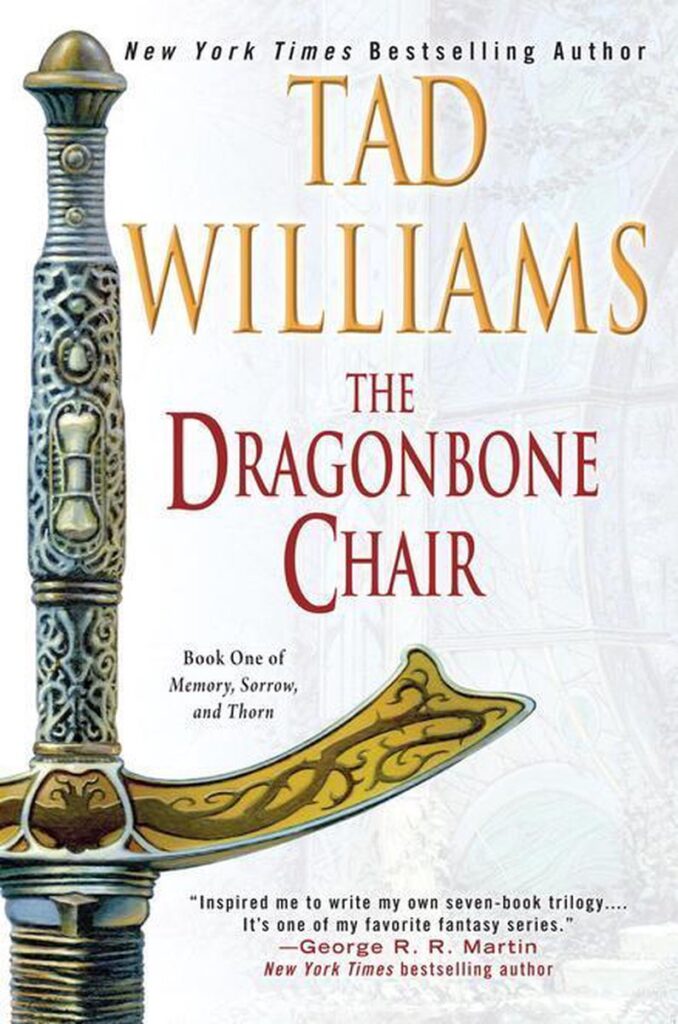
Review : The Dragonbone Chair
You can absolutely see how The Dragonbone Chair influenced modern fantasy giants like George R.R. Martin and Robin Hobb. It’s clear that they took elements they liked from this world and reworked them into different kinds of stories.
Simon, the main character, is difficult to connect with. He’s bland, sometimes frustratingly incompetent, and very much reads like the 15-year-old boy he’s meant to be (although I feel that somehow discredits some children). I didn’t enjoy his perspective much, but I am curious to see how he matures across the trilogy and whether he finally starts doing some internal reflection. I did like his interactions with mentors and other cultures, since those gave me a chance to learn more about the world (even if it had to come through his eyes).
Personally, I would have loved more points of view beyond Simon. Characters like Prince Josua, Maegwin, Miriamele, and even Pryrates feel compelling and complex. Getting inside their heads would have deepened the emotional core of the story. Binabik (and his wolf, Qantaqa) was a highlight. Wise, strange, and a bit mysterious, he serves as Simon’s guide and conscience. I loved that he regularly calls Simon out, especially with lines like:
“When it falls on your head, then you are knowing it is a rock.”
The first few hundred pages were the strongest for me. I really enjoyed the relationship between Simon and Doctor Morgenes; the teacher-student bond was warm and meaningful, and their scenes had a sense of wonder and depth. How Morgenes plays a role later on is also interesting, and I’m curious to know what he knew. I especially liked the hints in his manuscripts suggesting that King John wasn’t as heroic as the stories make him out to be.
I also loved Jiriki pointing out that Simon’s people once drove out and slaughtered the Sithi; a reminder that history is often written by the victors and that conquerors aren’t always the good guys. The Sithi are fascinating people: ancient and morally distinct. I’m excited to see more of them and how Simon continues to interact with them now that the larger conflict is taking shape.
The politicking scenes occasionally bogged the story down for me. Some of the jumps between court intrigue and Simon’s journey felt abrupt, and it could be hard to keep track of who was who.
Still, Williams’ prose really works for me. There’s a nostalgic, old-world tone that feels comforting, even though this was my first time reading it. A few lines really stood out:
“Books are a form of magic—because they span time and distance more surely than any spell or charm.”
“He who is certain he knows the ending of things when he is only beginning them is either extremely wise or extremely foolish; no matter which is true, he is certainly an unhappy man, for he has put a knife in the heart of wonder.”