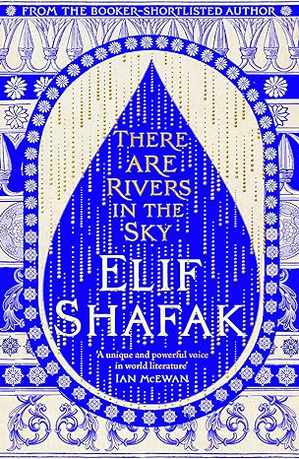
Review: There are Rivers in the Sky
Elif Shafak’s There Are Rivers in the Sky is a beautifully crafted novel that explores profound themes like culture, heritage, religion, and the water crisis. The recurring motif of water, its cycle and symbolism, links characters across time and space. The novel delivers a deeply moving and educational reading experience.
Shafak’s lyrical writing results in many memorable, quote-worthy passages. However, she occasionally includes extended lists that stretch a quarter of a page, which disrupts the flow for me and makes those sections tempting to skim. If not for that, her writing would have easily earned a perfect score from me.
The setting is particularly compelling. I didn’t remember much about the history of Mesopotamia before reading this, so this novel not only filled in gaps but also inspired me to watch a documentary on the topic afterwards.
If you don’t want to know any type of spoilers, don’t read further (only minor spoilers).
I was deeply invested in the characters; each one of them had an interesting story. Arthur, a 19th-century scholar who was raised in difficult circumstances and never fully accepted, only finds a sense of purpose when immersed in his research on ancient Mesopotamia. His internal and external struggles are powerfully portrayed.
Narin, a young Yazidi girl raised by her grandmother, offers a poignant glimpse into a threatened culture. Her storyline, particularly when she falls victim to ISIS, is deeply moving. The violence is not described in overly graphic terms, but the emotional weight is undeniable, a reminder of real-world horrors that many have endured.
Zaleekah, a to-be divorced woman in her thirties, also brings a strong emotional thread to the novel. Struggling with depression and having grown up as an orphan under her uncle’s care, she adds a quieter perspective to the narrative.
The novel’s conclusion aims to weave all these perspectives together, and while the intent is admirable, the execution felt a bit rushed. I would have appreciated more time for the connections between storylines to develop and resonate fully.
Later, when the storm has passed, everyone will talk about the destruction it left behind, though no one, not even the king himself, will remember that it all began with a single raindrop.
For, unlike humans, water has no regard for social status or royal titles.
Three atoms joint to form water: H-O-H.
Three characters connect across borders of time and place, and together they make this story.
Well, this world is a school and we are its students. Each of us studies something as we pass through. Some people learn love, kindness. Others, I’m afraid, abuse and brutality. But the best students are those who acquire generosity and compassion from their encounters with hardship and cruelty. The ones who choose not to inflict their suffering on to others.
Hatred is a poison served in three cups. The first is when people despise those they desire – because they want to have them in their possession. It’s all out of hubris! The second is when people loathe those they do not understand. It’s all out of fear! Then there is the third kind – when people hate those they have hurt.
We never want our parent’s weaknesses to be seen by others. Their failures are our own private affair, a secret we would rather keep to ourselves; when they become public, for everyone’s consumption, we are no longer the children we once were.
I do know what it is like to be misunderstood and treadted unjustly.
She wants to tell him that she does not necessarily view the breakdown of her marriage as a failure. She has loved, and been loved. What more could she want?
Home is where your loved ones are, but the reverse is also true. Those you love are your sanctuary, your shelter, your country and even, when it comes to that, your exile. Wherever they go, you will follow.
If you run too fast, you will miss the safe place where you might have hidden yourself.
If you go to other people’s land to take their things, you cannot get upset at them for questioning your motives.
You can grow up in a loving family and still struggle.
She listens without judgement, and somehow that is enough.